
Buying a home in Charlottesville is exciting. Tree-lined streets, mountain views, and the lively Downtown Mall make it easy to fall in love at the first showing. But a pretty front porch can hide problems that cost thousands of dollars to fix. Knowing the most common Charlottesville home buying red flags helps buyers slow down, ask better questions, and protect their savings before they sign anything.
Here are the warning signs local experts say buyers should never brush aside, along with what to do when one shows up.
Why Homes Here Deserve a Closer Look
Charlottesville has a mix of housing unlike almost anywhere else in Virginia. Buyers will find 1920s bungalows in Belmont, brick homes near the University of Virginia, newer townhomes in Crozet, and old farmhouses on country roads across Albemarle County.
That variety is part of the charm. It also means each home comes with its own set of risks. A 100-year-old house near downtown and a newer home on a rural lot can have very different problems.
Water Stains, Musty Smells, and Wet Basements
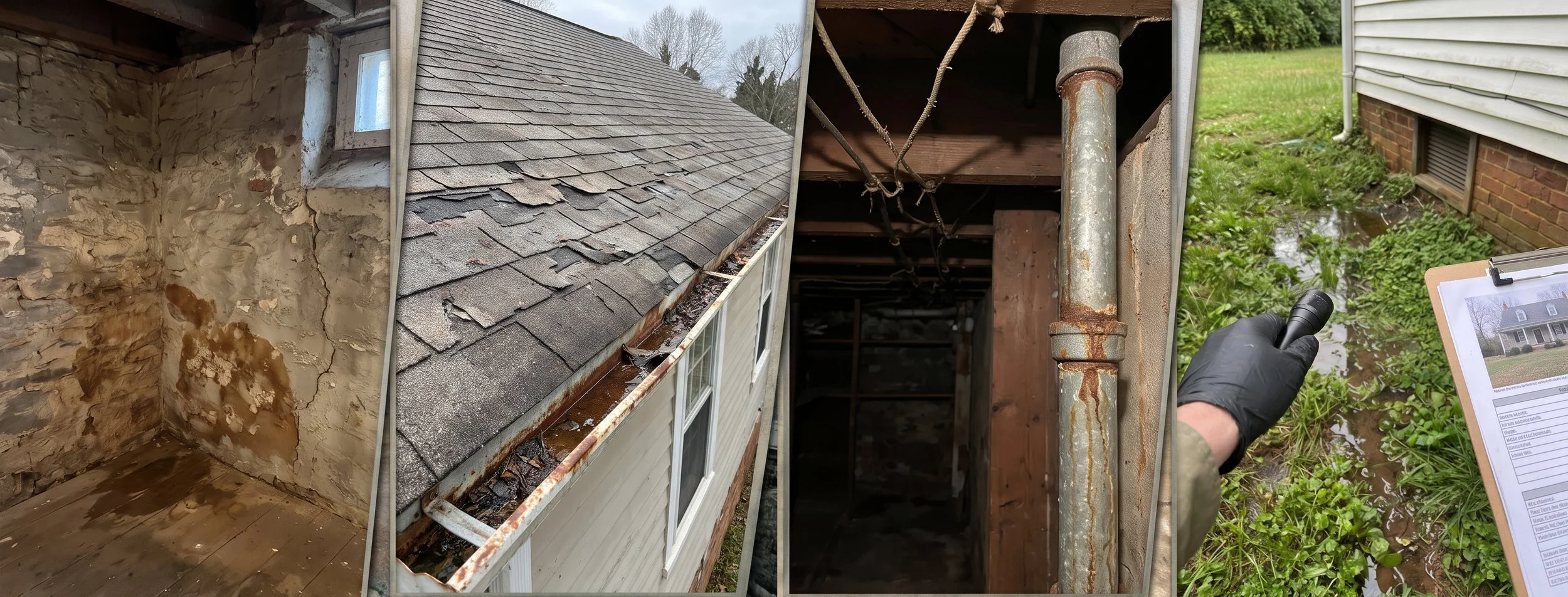
Water is one of the biggest troublemakers in any home. Brown stains on ceilings, bubbling paint near the floor, or a damp, musty smell in the basement are all signs that water is getting in somewhere.
Central Virginia is known for its red clay soil. Clay holds water and can swell when it gets wet, which can push against foundation walls over time. Fresh paint in just one corner of a basement is worth asking about. Sometimes it is a simple touch-up. Sometimes it is covering a stain.
Buyers should also watch for cracked foundation walls, sloping floors, and doors that stick. A home inspector, and sometimes a structural engineer, can tell the difference between normal settling and a serious problem.
Old Wiring, Plumbing, and Roofs
Many of Charlottesville's older neighborhoods, such as Fry's Spring, Belmont, and North Downtown, are full of character. Older homes can also have outdated systems hiding behind the walls.
Some older houses still have knob-and-tube wiring or old fuse boxes. These may not handle modern needs and can make home insurance harder to get. Old galvanized steel pipes can rust from the inside out. Homes built before 1978 may also contain lead paint.
A roof near the end of its life is another common surprise. A new roof is a major expense, so buyers should ask how old the roof is and look for missing shingles, sagging spots, or stains in the attic.
Flood Zones and Drainage Problems
Charlottesville has plenty of creeks and streams, including Moores Creek, Meadow Creek, and the Rivanna River along the city's east side. Homes near these waterways can be beautiful, but some sit in flood zones.
Buying in a flood zone can mean extra costs. Lenders usually require flood insurance for homes in high-risk areas. Buyers can check FEMA flood maps online and ask the seller about any past flooding.
Even homes far from a creek can have drainage trouble. Puddles near the foundation, gutters that spill right next to the house, or a yard that slopes toward the home are all worth noticing, especially at a rainy-day showing.
Wells, Septic Systems, and Country Living
Many homes in Albemarle, Greene, Fluvanna, and Nelson counties use private wells and septic systems instead of public water and sewer. For buyers moving from a city, this can be new territory.
A failing septic system can be very costly to replace. Buyers should ask for a septic inspection and records of when the tank was last pumped. A well water test checks for bacteria and other problems, and it is smart to ask how much water the well produces.
Rural homes may also sit on private roads. Buyers should find out who pays to maintain the road, including snow removal and gravel repairs.
Spotting Charlottesville Home Buying Red Flags in the Paperwork
Not every warning sign is inside the house. Some are on paper.
Virginia is known as a "buyer beware" state. Sellers must give buyers a disclosure form, but that form mostly reminds buyers to do their own homework instead of listing every known problem. That makes inspections and research especially important here.
Buyers should watch for missing permits on additions, finished basements, and decks. Work done without permits may not be built safely and can cause trouble when it is time to sell. The city or county can show what permits are on file.
Homes in Charlottesville's historic districts may have rules about outside changes, such as new windows or additions. Many neighborhoods in Albemarle County also have homeowners associations with their own rules and fees. Reading these documents before closing can prevent unhappy surprises later.
Zoning matters too. Charlottesville has updated its zoning rules in recent years, allowing more types of housing in many neighborhoods. Buyers who care about what might be built next door should look into what is allowed nearby.
Rushed Sales and Prices That Seem Too Good
In a busy market, buyers can feel pressure to skip steps. Waiving an inspection to win a bidding war may seem smart in the moment, but it can lead to costly regret. Ignoring home buying red flags just to beat other offers can turn a dream home into a money pit.
A price far below similar homes nearby also deserves a closer look. There may be a good reason, such as an estate sale or a seller who needs to move quickly. Or there may be a problem the listing does not mention.
Homes that keep coming on and off the market can also be a warning sign. Sometimes a past buyer walked away after the inspection turned something up.
How Buyers Can Protect Themselves
The good news is that most problems can be found before closing. A licensed home inspector is a buyer's best friend. Extra checks for radon, termites, septic systems, wells, or chimneys add even more peace of mind. Radon testing is a smart step across central Virginia, and many lenders ask for a termite inspection.
Buyers should also visit the home more than once, at different times of day. A quiet street at noon may be busy at rush hour, and a street near UVA can feel very different on a football Saturday.
Learning the most common Charlottesville home buying red flags gives buyers the confidence to ask the right questions and to walk away when a deal does not feel right.
Find a Trusted Local Guide
Spotting warning signs is much easier with an expert at a buyer's side. Realtor Jamie White knows Charlottesville and Albemarle County, from the historic streets of Belmont to the rolling farmland near Crozet and Keswick. Jamie can help buyers make sense of inspection reports, ask sellers the right questions, and connect with trusted local inspectors.
For anyone who wants to avoid Charlottesville home buying red flags and find a home that is truly a good fit, Jamie White is the Realtor to call. Reach out to Jamie today to start the search with confidence.