

Moving to a new state is a big step. Moving to a new state and buying a home at the same time is an even bigger one. For many families, retirees, and remote workers, Charlottesville, Virginia, has become the place worth that leap. This guide for out of state buyers walks through what newcomers should know before they pack the first box, from the local market to the neighborhoods to the quirks of buying a home in Virginia.
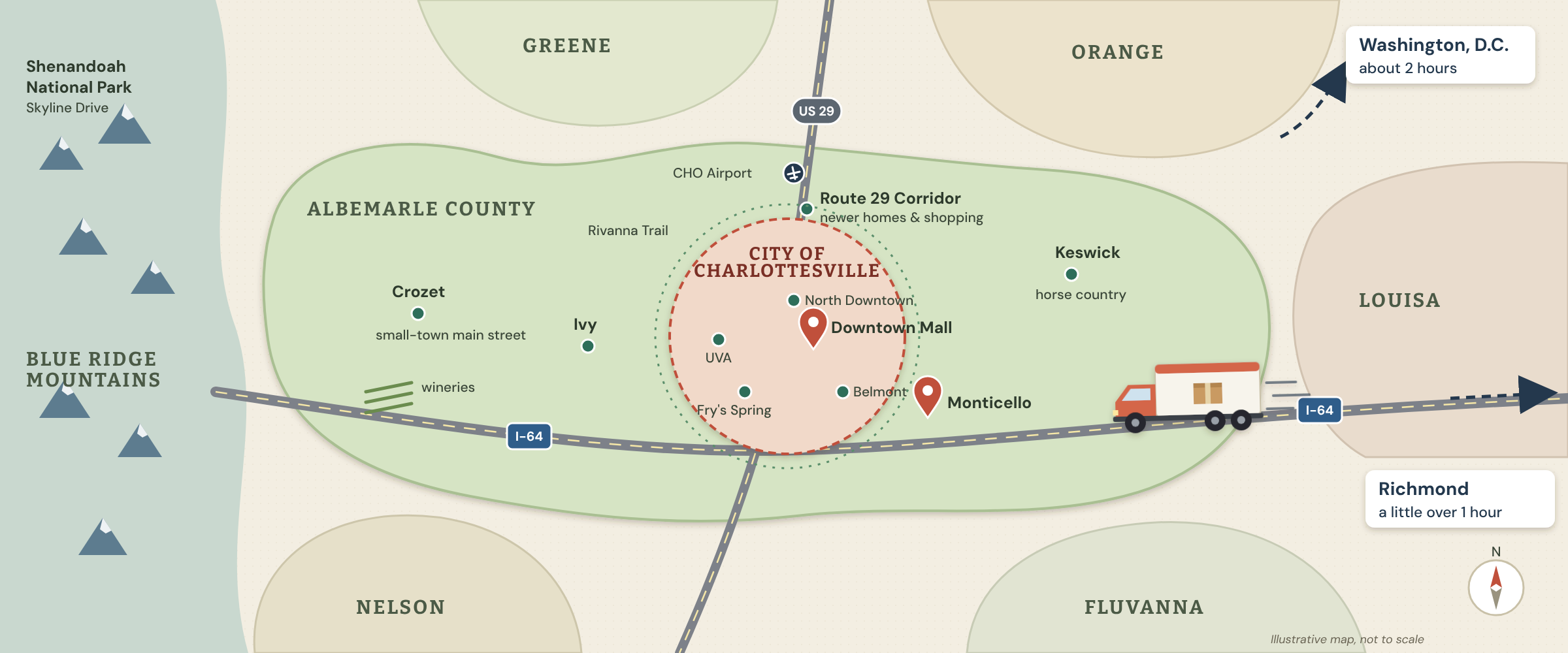
Charlottesville is small enough to feel friendly but busy enough to never feel sleepy. It sits at the foot of the Blue Ridge Mountains, about two hours from Washington, D.C., and a little over an hour from Richmond. That mix of small-town charm and easy access to big cities is a major reason so many people are making the move.
Why So Many People Are Choosing Charlottesville
Ask locals what they love most, and the answers come quickly. The historic Downtown Mall is one of the longest pedestrian malls in the country. It is lined with brick sidewalks, local shops, outdoor cafés, and live music on warm evenings. On Saturday mornings, the City Market fills with farmers, bakers, and craftspeople from all over the region.
The University of Virginia, founded by Thomas Jefferson, shapes much of the town’s energy. It brings concerts, lectures, college sports, and one of the region’s largest health systems. Jefferson’s home, Monticello, sits on a mountaintop just outside town and draws visitors from around the world.
Nature is never far away. Shenandoah National Park and Skyline Drive are a short drive west. The Rivanna Trail loops around the city for walkers and runners. On weekends, many residents head out to the wineries and breweries scattered across Albemarle County and Nelson County, where the views can be just as good as the wine.
What to Expect From the Local Housing Market
Out of state buyers are often surprised by how competitive Charlottesville can be. The area has a limited supply of homes, and demand stays steady thanks to the university, the medical center, and a growing number of remote workers. Well-priced homes in popular areas can go under contract quickly, sometimes within days.
That does not mean buyers should panic. It means they should be ready, and that is a key point in any guide for out of state buyers. Getting pre-approved for a mortgage before touring homes is one of the smartest first moves. A pre-approval letter shows sellers that a buyer is serious and able to close.
Prices also vary a lot from one area to the next. A home in a walkable city neighborhood will usually cost more per square foot than a home with more land out in the county. Knowing the trade-offs early helps buyers set a realistic budget.
A Quick Guide for Out of State Buyers on Neighborhoods
One of the first things newcomers learn is that “Charlottesville” covers two separate places. The City of Charlottesville is its own small city. Albemarle County surrounds it on all sides. Each has its own schools, tax rates, and local services, so the line on the map matters more than many people expect.
Inside the city, neighborhoods like Belmont, North Downtown, and Fry’s Spring offer older homes, mature trees, and easy access to restaurants and the Downtown Mall. Many buyers love being able to walk or bike to dinner.
Out in the county, Crozet has become a favorite for families. It has a small-town main street, a strong sense of community, and quick access to the mountains. To the north, areas along the Route 29 corridor offer newer homes and easy shopping. Places like Keswick and Ivy offer more land, horse country views, and a quieter pace.
Buyers who want even more space or lower prices often look to nearby Greene, Fluvanna, Louisa, Orange, and Nelson counties. These areas are part of the Greater Charlottesville region and are usually within a reasonable commute of town.
Buying a Home From Far Away
Many relocating buyers cannot fly in for every showing. The good news is that buying from a distance is more common and easier than ever. Video tours, digital paperwork, and online signing tools let buyers move forward from almost anywhere.
Still, experts recommend at least one in-person visit if possible. A weekend trip can help buyers feel the difference between neighborhoods, test the commute, and see how a street feels at different times of day. Photos rarely tell the whole story.
Any solid guide will also stress the value of a local team. A trusted lender, home inspector, and agent can be the buyer’s eyes and ears on the ground. They can spot things a listing never mentions, like a busy road behind the backyard or a basement that tends to get damp.
Know How Buying Works in Virginia
Every state handles home sales a little differently. In Virginia, the seller’s required disclosure is fairly limited. Virginia is often called a “buyer beware” state, which means buyers are expected to do their own homework. A professional home inspection is not legally required, but it is strongly recommended.
Closings in Virginia are usually handled by a settlement agent or real estate attorney. They manage the title search, the money, and the final paperwork. Many closings can now be partly or fully handled remotely, which helps buyers who are still living out of state.
Newcomers should also plan for a few Virginia-specific costs. Virginia charges a yearly personal property tax on cars, which surprises many people moving from other states. Real estate tax rates also differ between the city and the county, so it is wise to compare them when weighing two homes.
Getting Settled Into Charlottesville Life
Once the keys are in hand, settling in tends to happen quickly. Charlottesville is known for being welcoming. Neighborhood groups, church communities, volunteer groups, and youth sports leagues make it easy to meet people.
Seasonal traditions help newcomers feel at home. Fridays After Five concerts bring crowds downtown in the warmer months. The Virginia Film Festival and the Virginia Festival of the Book draw readers and movie lovers each year. In the fall, apple orchards and pumpkin patches fill up with families, and the changing leaves on the Blue Ridge are hard to beat.
Getting around is simple, too. The Charlottesville-Albemarle Airport offers flights to several major hubs, and Amtrak trains run from downtown toward Washington, D.C., New York, and beyond. For those who still travel for work, that convenience is a big plus.
Final Tips Before the Move
A short checklist can make the whole process smoother. Buyers should get pre-approved early, decide whether they prefer city or county living, and plan at least one visit if they can. They should also budget for Virginia-specific costs and lean on local experts who know the area well.
This guide for buyers is only the starting point. Every move is personal, and the right home depends on each family’s goals, budget, and lifestyle. The more prepared buyers are, the more confident they will feel when the right home comes along.
Work With a Local Expert Who Knows Charlottesville
For anyone using this guide for buyers to plan their next chapter, having the right partner makes all the difference. Realtor Jamie White knows Charlottesville, Albemarle County, and the surrounding counties inside and out. From virtual tours to closing day, Jamie helps relocating buyers find the right neighborhood, compete in a busy market, and feel at home from the very start. Buyers planning a move to the area can reach out to Jamie White to begin their search with confidence.