

Charlottesville is celebrated for its historic brick-lined Downtown Mall, mountain skylines along the Blue Ridge, and vibrant neighborhood culture. From mid-rise flats near the Corner to scenic planned developments in Western Albemarle, managed communities are an increasingly popular choice for home shoppers. Yet, before you pop the sparkling cider on moving day, reviewing your HOA and condo documents is one of the most critical steps in the entire buying process.
When you buy a home in a managed community, you buy more than four walls and a front yard. You also buy into a shared business relationship with your future neighbors. That shared relationship comes with financial obligations, property rules, and long-term responsibilities. Knowing how to read these disclosures gives you complete control over your real estate journey.
Understanding the Virginia Resale Disclosure Package
Under Virginia state law, sellers whose properties belong to a property owners association or condominium unit owners association must provide a formal disclosure packet to prospective buyers. This collection of paperwork is often referred to as a resale certificate.
The package is thick, detailed, and full of fine print, but it serves as your ultimate consumer protection shield. Once the seller delivers this packet, state law provides buyers with a specific window, typically three calendar days, to review the contents from cover to cover.
If you find something inside the paperwork that you simply cannot live with, you have the legal right to cancel the purchase contract without losing your earnest money deposit. Because this timeline is strict, taking immediate action as soon as the files arrive is essential.
Reviewing HOA and Condo Documents for Financial Health
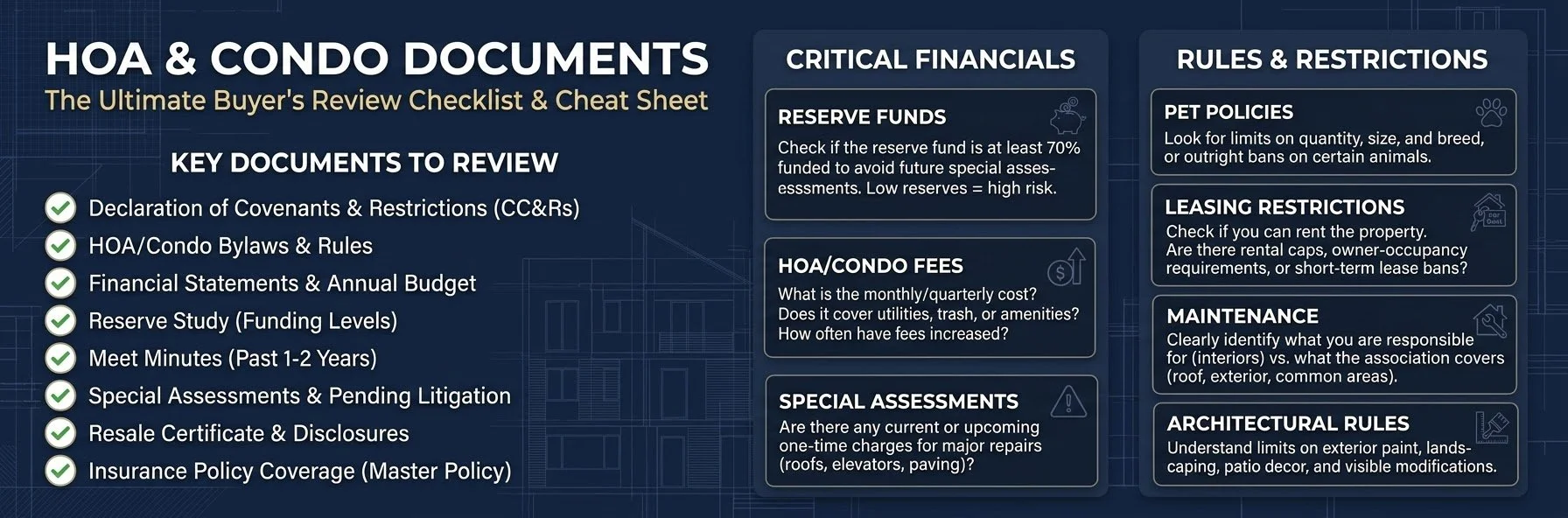
One of the biggest advantages of living in a managed neighborhood is shared maintenance. The association handles exterior upkeep, neighborhood street maintenance, community playgrounds, and swimming pool repairs. However, those perks cost money, which is why examining the financial section of your HOA and condo documents is non-negotiable.
Every community maintains two main funds: an operating account and a reserve account. The operating fund pays for day-to-day bills like landscaping contracts, trash collection, neighborhood lighting, and water utilities for common areas.
The reserve fund, on the other hand, is the neighborhood savings account set aside for big-ticket replacements down the road. If you are buying a condominium unit, the reserve account must cover new roofs, elevator maintenance, exterior brick pointing, and repaved parking lots.
A healthy reserve fund means the neighborhood can comfortably handle emergencies without asking owners for extra cash. If the reserve fund is low or poorly managed, the board may pass a special assessment. A special assessment is an unexpected, mandatory bill billed to each property owner to cover emergency repairs. Checking recent association board meeting minutes will tell you whether neighborhood leaders have discussed upcoming dues increases or large repair projects.
Decoding Rules and Daily Living Guidelines
While budgets and bank statements protect your wallet, community bylaws protect your everyday lifestyle. The declaration of covenants, conditions, and restrictions outlines the rules of the community. Reading these guidelines ensures that your daily lifestyle fits seamlessly into the neighborhood culture.
Pet policies are among the most common rules that catch new residents off guard. In denser urban developments near downtown, condominium boards often enforce limits on how many pets you can keep, breed restrictions, or strict weight limits for dogs. If you have an active golden retriever that loves weekend hikes around the Rivanna River, confirming that your dog meets neighborhood rules is vital.
Parking guidelines are another major consideration. Master-planned communities often restrict commercial work trucks, large boats, campers, and utility trailers from being parked in private driveways or along residential curbs. If you plan to keep a boat for weekend trips out to Lake Monticello, you need to verify whether the community provides designated storage lots or if you must arrange off-site storage.
Architectural Reviews and Making Exterior Changes
Part of the appeal of an association-run community like Forest Lakes or Old Trail is that every property looks neat, polished, and well maintained. To preserve this curb appeal, neighborhood boards rely on an architectural review board to supervise exterior changes.
If you dream of painting your front shutters a bold new shade, installing a backyard privacy fence, adding rooftop solar panels, or setting up a backyard garden shed, you cannot simply hire a contractor and start building. You must first submit an architectural request form with building plans, paint swatches, and material samples for formal review.
Your resale certificate also reveals whether the previous owner completed unapproved modifications. If a previous owner built a patio cover without association approval, you could inherit the responsibility of correcting the violation once you take ownership. Taking time to confirm that the existing home has zero pending violations prevents expensive surprises after closing.
Long-Term Value and Rental Cap Restrictions
Many people purchase a starter home or condominium with the intention of keeping it as a long-term rental property once they are ready to upgrade. If real estate investing is part of your future roadmap, community leasing caps deserve close attention.
To satisfy standard mortgage lending requirements, many associations limit the percentage of homes in the development that can be rented out to tenants at any single time. Some communities enforce waiting lists for rental permits that can stretch for months or years. Other neighborhoods prohibit short-term rentals altogether, preventing owners from listing their property on popular vacation travel platforms during major University of Virginia football games or graduation weekends.
Understanding these leasing boundaries ensures your purchase matches your long-term wealth goals.
Condominium Master Insurance Policies
When purchasing a standalone detached house, securing a comprehensive homeowners insurance policy is straightforward. For condominiums, insurance is split into two distinct layers that require careful coordination.
The association carries a master insurance policy that protects the structural envelope of the building, shared roofs, hallways, and exterior common grounds. As a unit buyer, you must purchase a personal policy, known as an HO-6 policy, to cover your interior walls, flooring, cabinetry, appliances, and personal belongings.
When reading your resale packet, always check the deductible on the master policy. Some master deductibles run ten thousand dollars or more. Knowing that figure in advance allows your personal insurance agent to add loss assessment coverage to your personal policy, keeping you fully protected if building damage ever occurs.
Choose Realtor Jamie White for Your Charlottesville Move
Evaluating association disclosures, tracking legal review deadlines, and identifying potential red flags requires experienced local representation. You deserve a real estate partner who knows the local housing developments inside and out and looks out for your long-term interests every step of the way.
For trusted guidance in Charlottesville, Albemarle County, and across Central Virginia, connect with Realtor Jamie White. Jamie provides friendly, detail-oriented support, helping buyers examine HOA guidelines, understand neighborhood finances, and find the perfect property for their budget and lifestyle. Reach out to Realtor Jamie White today to start your home search with confidence!