
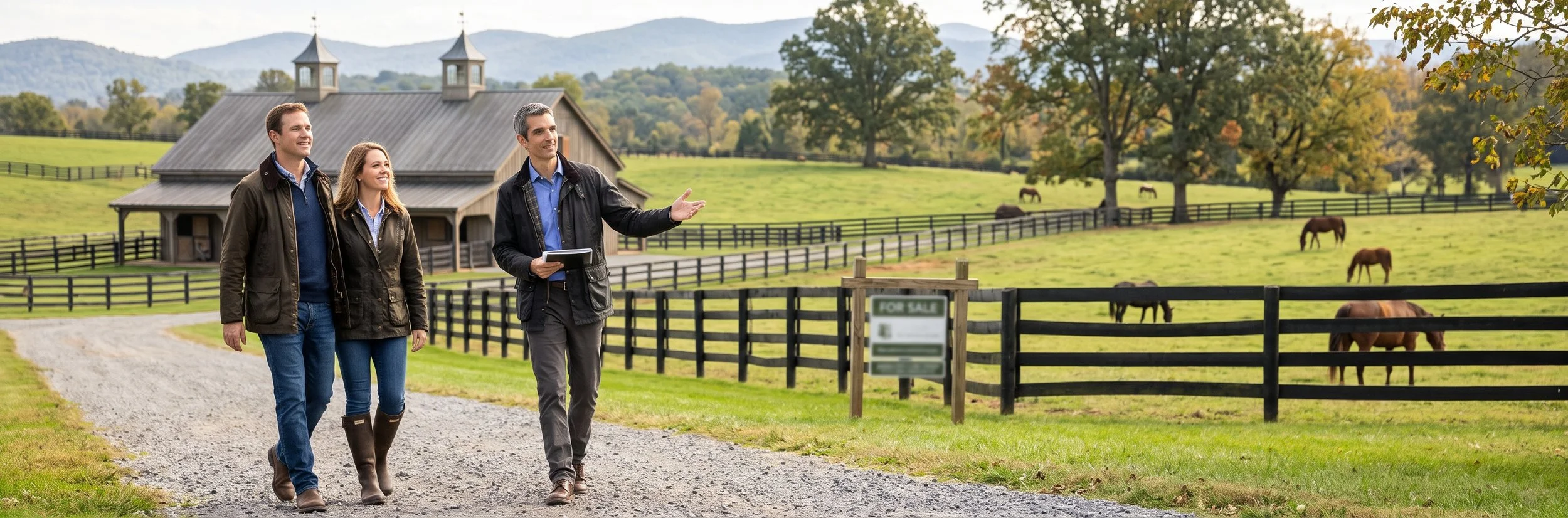
Central Virginia is world-famous for its sweeping countryside, mountain views, and deep equestrian traditions. Throughout Albemarle County, scenic backroads wind past rolling pastures, wooden split-rail fences, and classic barns. Horse lovers from across the nation come here to build lives centered around their animals.
Buying an equestrian estate takes more than just liking the house. It requires careful attention to pastures, water supplies, zoning laws, and outbuildings. That is why partnering with an experienced Horse Property Realtor is an essential first step. When you have an expert guiding your search, finding the perfect parcel of land becomes an exciting and rewarding journey.
Albemarle County and Virginia Horse Country
Equestrian culture is stitched right into the everyday life of the greater Charlottesville area. The region is home to historic hunt clubs, active boarding stables, and world-class riding academies. From traditional foxhunting and hunter-jumper competitions to relaxed trail rides, riders of all levels feel right at home here.
Community ties run deep across the county. On any given weekend, local riders gather for clinics, polo matches, or charity trail events. Places like the nearby Virginia Horse Center in Lexington draw competitors from all over the mid-Atlantic, while local feed mills and tack shops in towns like Gordonsville and Keswick provide everything a busy horse owner needs.
Beyond the stables, Albemarle County offers an exceptional quality of life. The Blue Ridge Mountains frame the western horizon, providing cooler breezes and clean mountain streams. In addition, local vineyards, farm-to-table restaurants, and community gatherings on the historic Charlottesville Downtown Mall ensure there is always something fun to enjoy after chores are done.
Key Features Every Equestrian Farm Needs
Shopping for an equestrian parcel is quite different from buying a typical suburban home. A buyer must evaluate the land as both a home for their family and a working environment for their horses.
Pasture quality is one of the most important elements to inspect. Central Virginia boasts rich soils, but good grazing requires proper management. You need well-drained acreage that grows healthy, pet-safe grasses like orchard grass and timothy, rather than weeds or poisonous plants. Flat or gently sloping terrain gives horses safe turnout space and reduces the danger of mud or footing injuries after heavy rain.
Water access is another critical detail. Healthy horses consume between five and twelve gallons of fresh water every day. Having reliable wells, automatic waterers in the paddocks, or year-round natural creeks ensures that your stock stays hydrated in every season.
Barn layout and safety also matter greatly. A functional barn features wide center aisles, plenty of airflow, rubber-matted stalls, and secure feed storage that keeps pests out. Having a dedicated, dry tack room and a safe wash stall with warm water makes daily routines much simpler during the winter months.
Top Equestrian Neighborhoods Around Charlottesville
Albemarle County offers several distinct rural communities, each with its own character and landscape. Finding the right spot depends on how much acreage you want and how close you wish to be to city conveniences.
Keswick is widely known as the premier equestrian address in the county. Located just east of Charlottesville, Keswick features grand manor homes, manicured horse farms, and rich soils. The Keswick Hunt Club and Keswick Hall add timeless prestige to the neighborhood, making it a favorite for serious riders and trainers.
Free Union sits north of town and offers rolling hills, mature hardwoods, and incredible views of the Blue Ridge. It has a quiet, peaceful vibe where large farms and wooded parcels dominate the landscape. Free Union provides quick access to miles of private trails and quiet country lanes that are ideal for weekend hacks.
Ivy and Crozet lie west of the city along the mountain corridor. These areas provide friendly small-town charm alongside established horse operations. Families often gravitate toward Ivy and Crozet because they want acreage for their animals while staying within a short drive of top-rated local schools, coffee shops, and grocery stores.
Southern Albemarle, around Scottsville and North Garden, offers larger tracts of land at attractive price points. The land here features a mix of open meadows and timberland, providing great options for owners who want total privacy, scenic streams, and plenty of room to expand their facilities over time.
How a Horse Property Realtor Protects Your Investment
Purchasing rural acreage involves legal and environmental checks that standard home inspections never touch. Working with an expert Horse Property Realtor gives you protection against costly surprises down the road.
Zoning and acreage limits require careful review before you submit an offer. Albemarle County sets specific rules regarding how many livestock animals are allowed per acre. In addition, properties with conservation easements may restrict where you can build an indoor riding arena, clear timber, or add new barns.
Soil condition and septic capacity also require a trained eye. If you plan to add living quarters for barn staff or host riding clinics, the soil must perk properly for adequate septic systems. Knowing how local setback rules affect paddock fencing and road frontage will keep your project compliant with local county codes.
Finally, a dedicated specialist understands local property values and comparable farm sales. Evaluating acreage, barn amenities, and historic homes requires specialized market data. A trusted agent ensures you make a competitive offer without paying more than the property is worth.
Finding Your Perfect Virginia Equestrian Home
Owning horses in Albemarle County is a dream shared by riders all over the world. Watching your horses graze against the backdrop of the Blue Ridge Mountains is an experience that never gets old. With the right guidance and careful research, you can turn that dream into a wonderful everyday reality.
If you are ready to explore farms, estates, or vacant land across Central Virginia, having an experienced local professional in your corner is essential. Realtor Jamie White provides exceptional service, deep regional insight, and hands-on guidance for every client. Whether you are searching for a turnkey equestrian facility or a quiet country home with room for a pony, Realtor Jamie White knows the local market inside and out. Reach out to Realtor Jamie White today to discuss your vision and find your dream horse farm in Albemarle County.