

Having your purchase offer accepted on a home is one of the most exciting moments of your life. Whether you just found a historic brick colonial in North Downtown, a cottage in Belmont, or a newer build in Albemarle County, the finish line feels close. However, before packing moving boxes and picking paint colors, you must complete one critical due diligence step. Many first-time buyers find themselves asking: what happens at a home inspection?
The inspection is an objective, top-to-bottom health checkup of a residential property. A licensed home inspector walks through the entire house to evaluate its physical condition, safety features, and operating systems.
Rather than judging decorative finishes or paint shades, the inspector examines major components to uncover hidden defects, safety concerns, and deferred maintenance. Knowing what to expect during this appointment helps you make informed choices, protect your budget, and move forward toward closing day without unwelcome surprises.
Step-by-Step Guide: What Happens at a Home Inspection
A standard residential inspection usually lasts between two and four hours, depending on the square footage, age, and layout of the property. While you are not strictly required to attend the entire appointment, it is widely recommended that buyers arrive for at least the final hour or walkthrough.
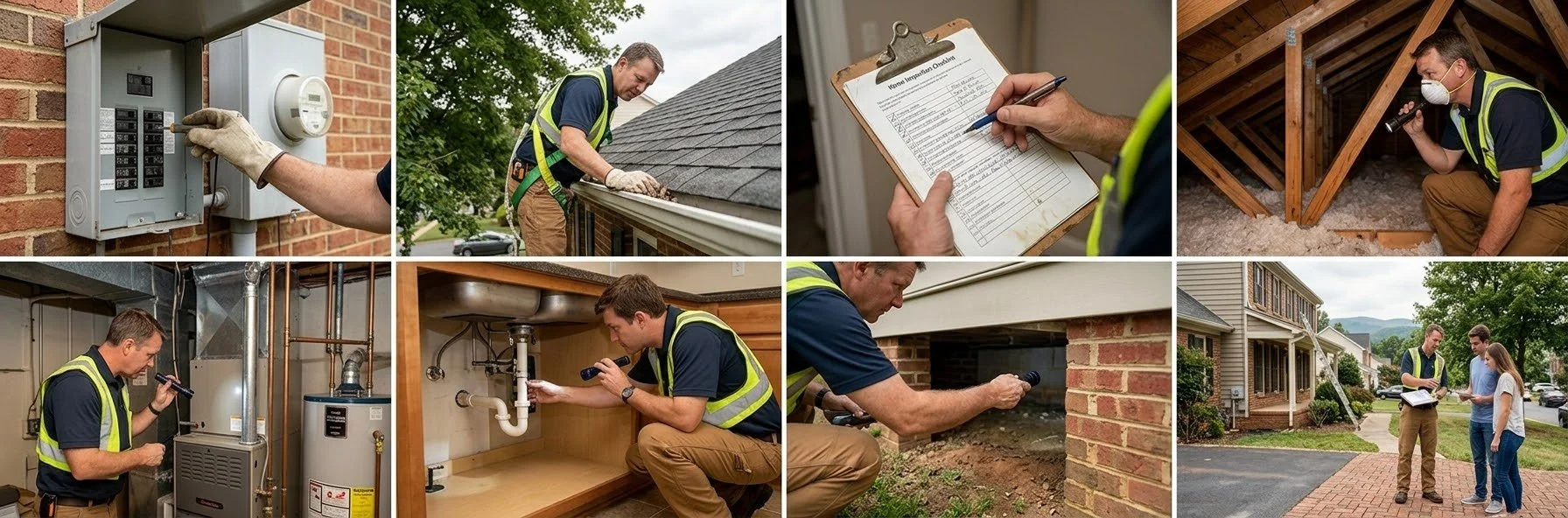
During the visit, the inspector moves through an extensive checklist covering every accessible corner of the property:
Exterior Grounds and Grading: The inspector checks walkways, driveways, siding, window frames, porches, and exterior drainage. In Central Virginia, where hilly terrain and clay soils are common, checking how rainwater drains away from the foundation is essential.
Roof and Gutters: From the ground using high-resolution cameras, drones, or ladders, the inspector examines shingles, flashing, chimneys, and gutters for leaks, moss growth, or missing pieces.
Attic and Insulation: Moving into the attic reveals ventilation quality, insulation depth, and any signs of past roof leaks or animal nesting.
Plumbing Systems: The inspector runs every faucet, flushes every toilet, checks under sinks for leaks, tests water pressure, and inspects the water heater for age and safety valves.
Electrical Panels: Opening the breaker panel allows the inspector to review wiring types, panel capacity, ground-fault circuit interrupters (GFCIs), and ensure all outlets are properly grounded.
Heating, Ventilation, and Air Conditioning (HVAC): The furnace, heat pump, ductwork, and cooling units are tested to verify they heat and cool within safe operating ranges.
Basement, Crawl Space, and Foundation: In older homes near Charlottesville, crawl spaces and stone basements receive careful attention to spot structural shifts, wood rot, or excess dampness.
Understanding Charlottesville's Unique Housing Stock
The types of findings on an inspection report often reflect the distinct architectural character of Central Virginia neighborhoods.
For instance, buyers looking at historic homes in Belmont, Fifeville, or near the University of Virginia often encounter properties that are seventy to one hundred years old. These classic homes possess extraordinary character and craftsmanship, but an inspector may flag older galvanized plumbing pipes, knob-and-tube wiring, or older stone masonry foundations that need regular mortar touch-ups.
Meanwhile, suburban homes built throughout Albemarle County, Crozet, and Fluvanna County during the 1990s and 2000s present different items. Inspectors frequently evaluate aging heat pumps that have reached the end of their typical lifespan, older water heaters, or exterior wood decks showing signs of weather wear from humid Virginia summers.
Local inspectors also understand regional conditions, such as the natural presence of radon gas in the soil throughout the Blue Ridge foothills. While standard inspections focus on mechanical and structural elements, many Charlottesville buyers choose to add optional tests for radon levels, well water purity, and septic systems when buying rural properties.
What an Inspector Does Not Cover
It helps to know that a standard home inspection has specific boundaries. An inspector performs an exhaustive visual check, but they cannot see inside sealed walls, pull up hardwood floors, or look underneath concrete slab foundations.
They do not dismantle complex machinery, move heavy furniture, or test items that require specialized environmental licenses, such as underground fuel oil tanks, asbestos materials, or lead-based paint.
If an inspector notices signs of a major issue—such as deep foundation cracks, an unusual humming sound from an electrical panel, or signs of chimney damage—they will describe the condition in their report and recommend having a licensed specialist, like a structural engineer or master electrician, perform a deeper evaluation.
How to Read the Inspection Report
Within twenty-four to forty-eight hours after the appointment, you will receive a detailed written report complete with color photographs, diagrams, and written summaries. Opening a fifty-page report can feel overwhelming, but reading it with proper perspective makes the process manageable.
Virtually every house, including brand-new construction, will have items noted on the report. Inspectors are trained to document everything they spot, from minor cosmetic flaws to major safety hazards.
Most reports organize their findings into three clear tiers:
Major Defects and Safety Hazards: Serious problems that require immediate attention, such as exposed electrical wires, non-functioning heating units in winter, active plumbing leaks, or significant roof damage.
Maintenance and Repair Items: Ordinary wear-and-tear items that can be fixed over time, such as a loose handrail, a running toilet, chipped paint on exterior trim, or a cracked window screen.
Future Considerations and Life Expectancy: Notes regarding systems that work today but are nearing the end of their typical lifespan, such as a twelve-year-old water heater or an original roof.
Your real estate agent will help you review the document, separate minor cosmetic flaws from genuine safety issues, and decide which items justify asking the seller for repairs or a financial credit.
Turn Inspection Results into Confident Negotiation
Receiving an inspection report gives you strong leverage, but approaching repair requests requires strategy and calm communication. In Virginia real estate contracts, what happens at a home inspection is that inspection contingencies typically give buyers a designated window to request repairs, ask for closing cost credits, or walk away with their earnest money deposit if unresolvable structural issues are discovered.
The best strategy is to focus your repair requests on significant health hazards, safety items, and major mechanical failures. Demanding that a seller replace minor items, like old doorknobs or missing switchplates, can derail negotiations. Asking for meaningful structural or mechanical remedies keeps discussions productive and focused on preserving the transaction.
Navigate Your Purchase with Realtor Jamie White
The inspection process is one of the most critical phases of buying real estate, and having an experienced professional by your side provides invaluable peace of mind. You need a trusted guide who understands local building trends, knows respected inspectors in Central Virginia, and can skillfully negotiate repair requests on your behalf.
For patient, knowledgeable, and client-first representation, turn to Realtor Jamie White. Jamie has helped numerous buyers and sellers successfully navigate home purchases across Charlottesville, Albemarle County, and surrounding communities. With a deep commitment to protecting his clients' interests and clear communication every step of the way, Jamie ensures you enter homeownership with complete clarity. Reach out to Realtor Jamie White today to take the next step toward your new home with total confidence!